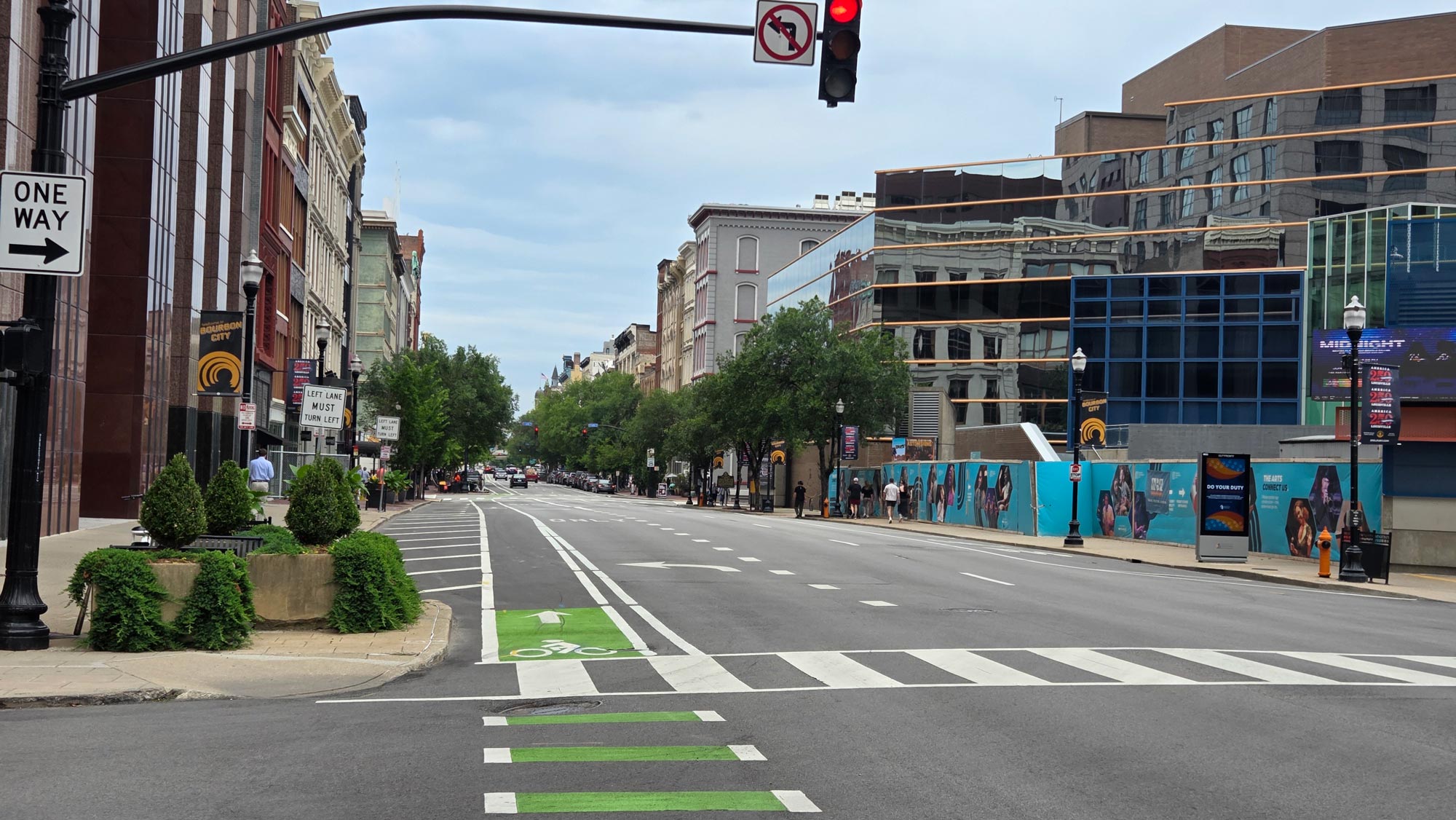
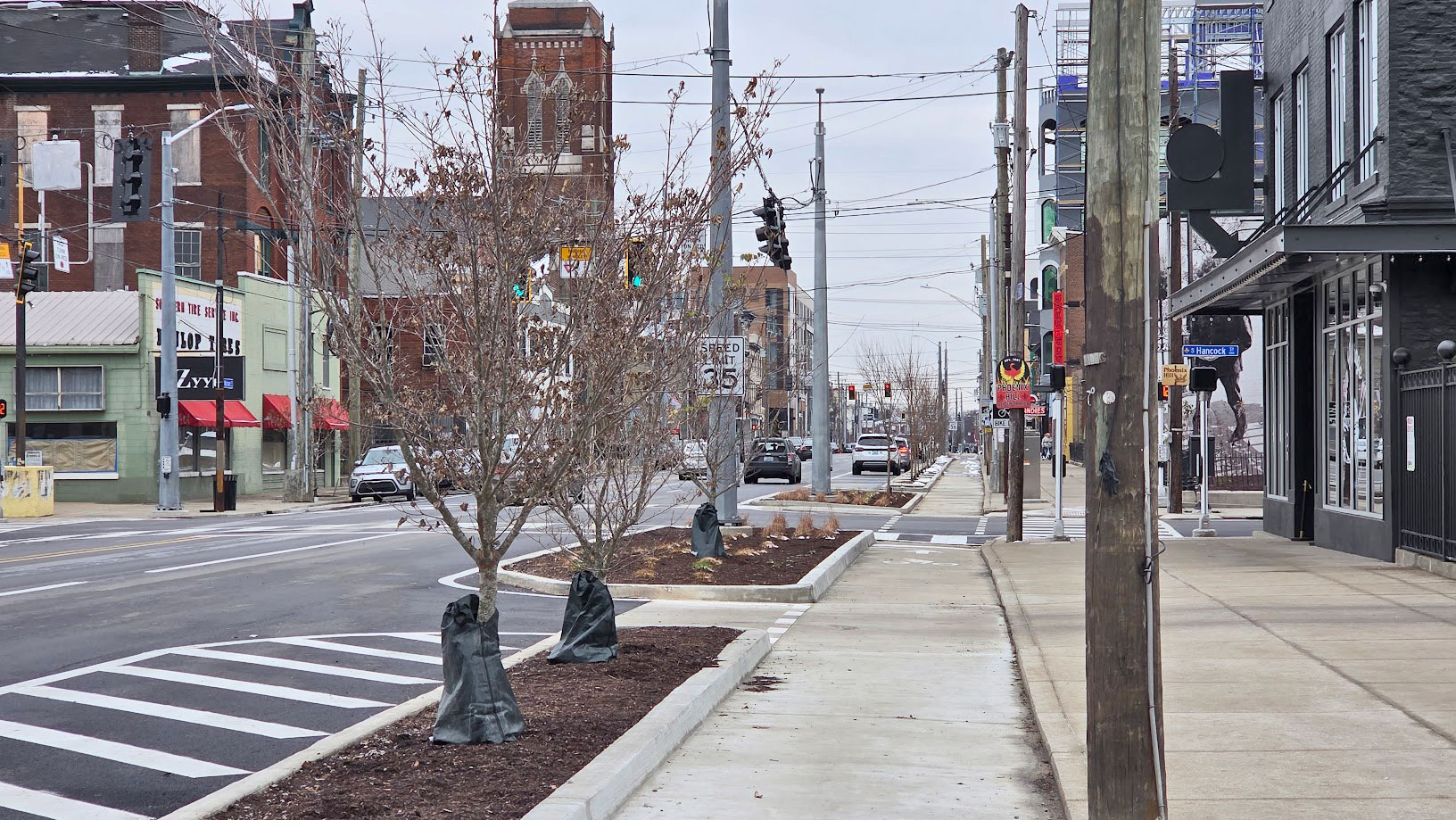
Over the past few years, Louisville Metro Government and KYTC have been on a kind of hot streak, redesigning and reconfiguring many of Louisville’s major roadways. As they have done so, protected bike lanes have been introduced on several streets in Louisville’s urban core. We have now seen protected bicycle infrastructure introduced on Main Street, East Market Street, and Lexington Road in the downtown area. There have also been some upgrades outside of downtown, such as the protected lane on Ellison.
Only a couple years ago, Louisville technically only had about a quarter mile of protected, on-street bike infrastructure across its entire 400 square mile extent. Most bike infrastructure projects were relegated to the Louisville Loop, which while a nice bikeway, left the urban neighborhoods without any substantial bike facilities. The Louisville Loop also serves a different purpose than the new bike lanes, since the Louisville Loop is generally oriented towards recreation rather than commuting or ferrying riders to and between businesses.
Now the city has approximately 2.5 miles of protected bicycle infrastructure, depending on how you count certain mixed use paths. While this is still a pretty small number given the size and population of Louisville, this is still a substantial increase and forms some extremely important connections that did not exist before. The east phase of Main Remade, between Second Street and Wenzel Street, is now striped and (mostly) useable for bike riders. This adjoins the East Market Street bike lane, which creates a completely protected bikeway through both of NuLu’s major roads. The Main bike lane also goes all the way down to Whiskey Row, where it meets with a new unprotected lane until Ninth Street. The unprotected lane is at least sizeable enough to prevent dooring incidents, creating a much safer bike connection between arguably the two most economically vital corridors in the downtown area: NuLu and West Main.
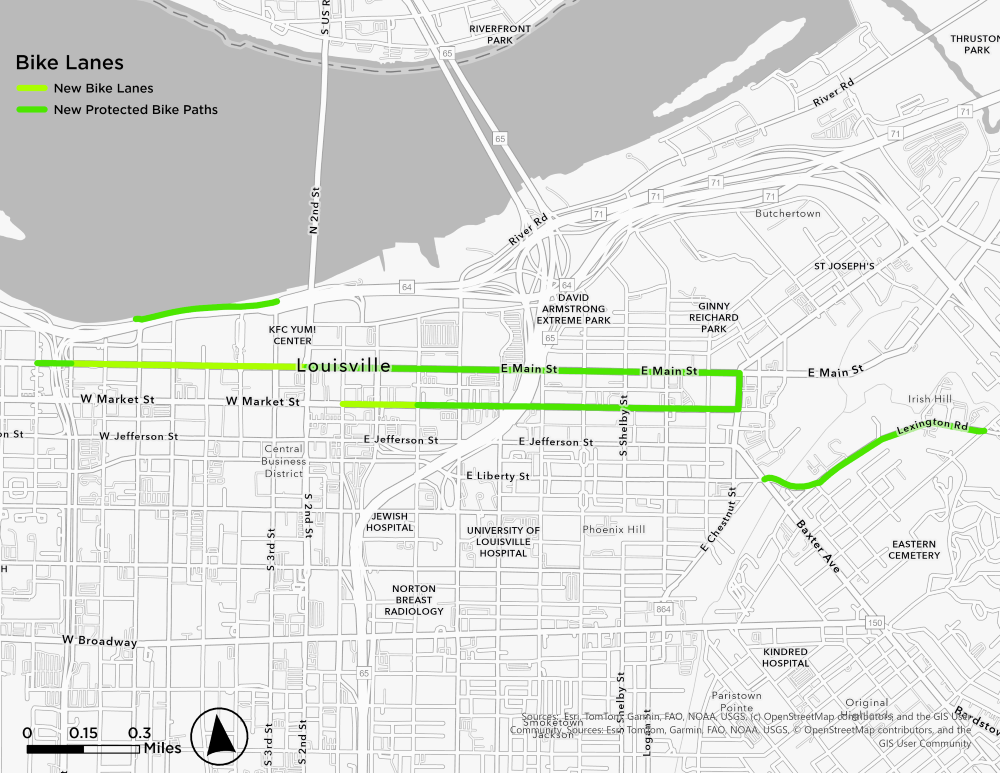
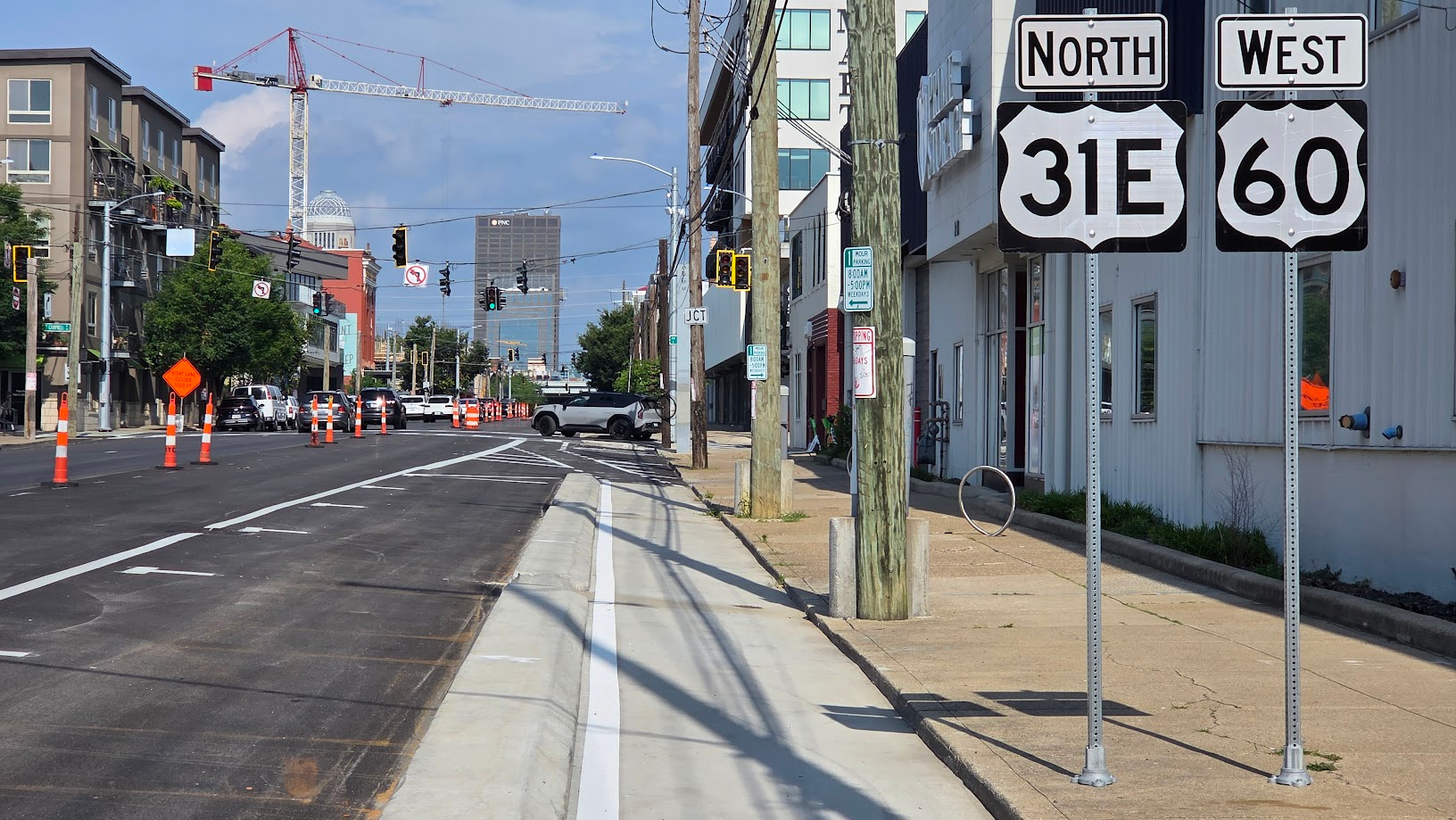
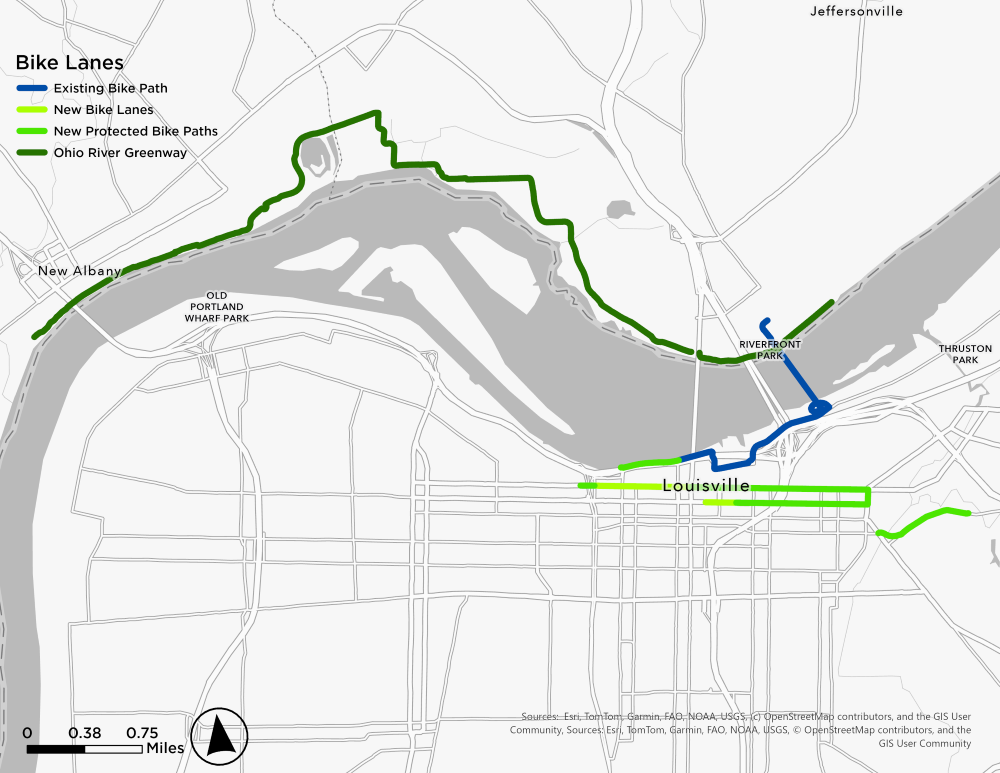
This almost-loop is adjoined by two other protected infrastructure additions: a multi-use path on River Road and a protected bike lane on Lexington Road. These additions now allow bike users to move between Downtown, Irish Hill, and southern Indiana while only having to use shared-lane bikeways for four or so blocks. The southern Indiana connection is especially important, since Jeffersonville recently filled the final gap in the Ohio River Greenway, a 7.5 mile bike path that connects Downtown New Albany, Clarksville, and Jeffersonville. This means that cyclists can now bike from somewhere like Irish Hill all the way to New Albany while barely having to interact with other vehicles!
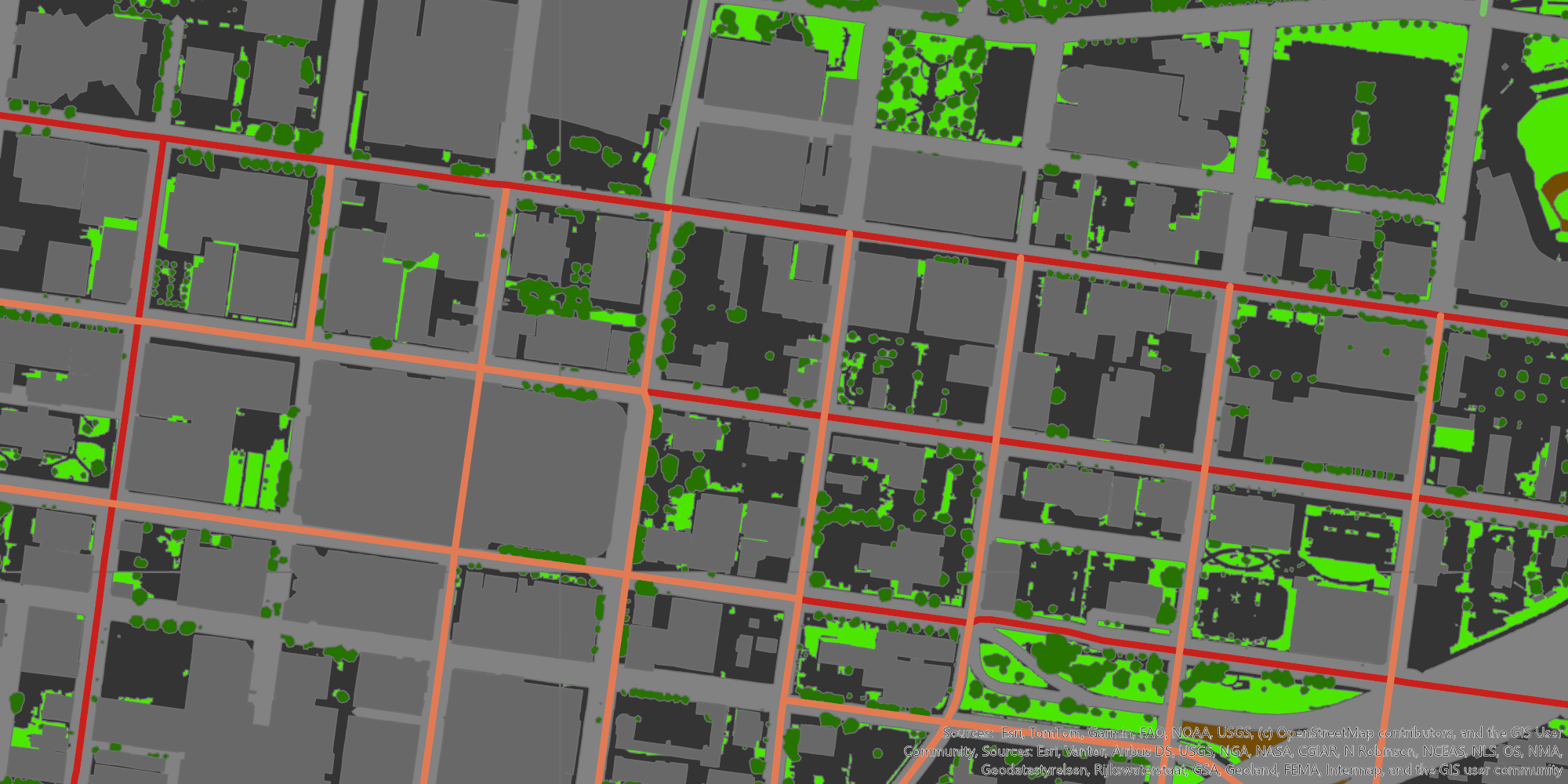
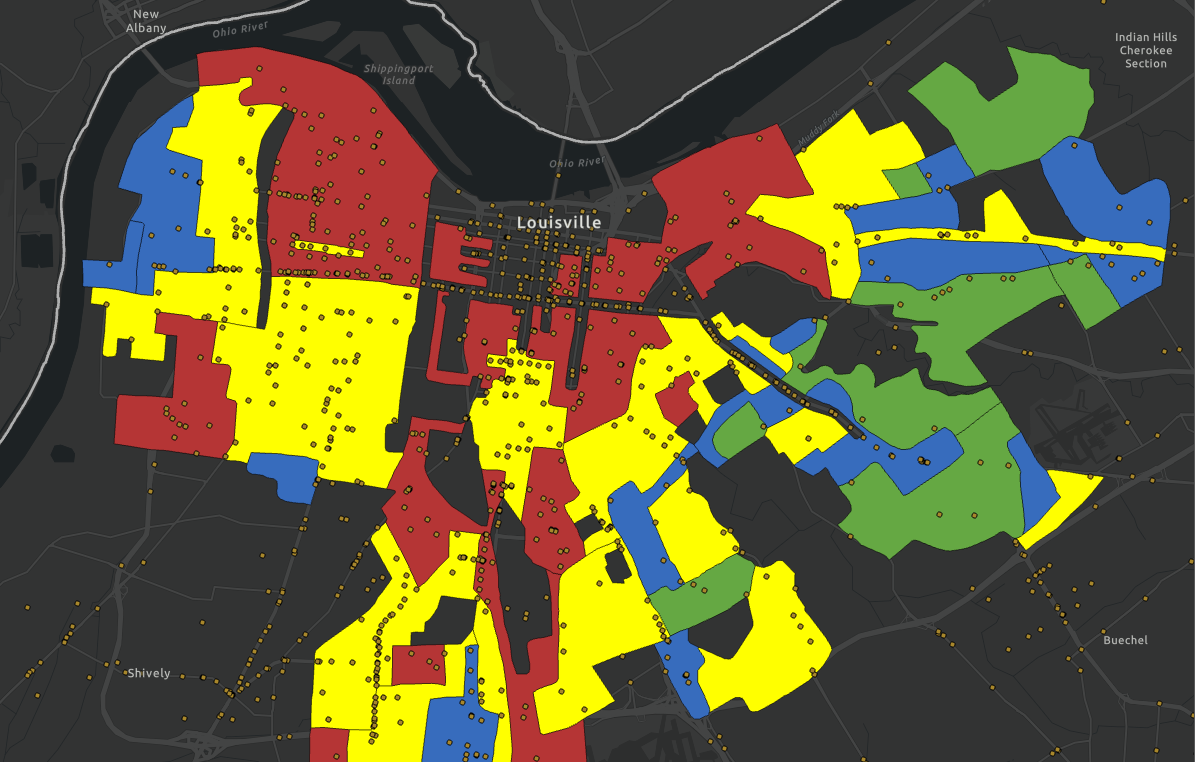
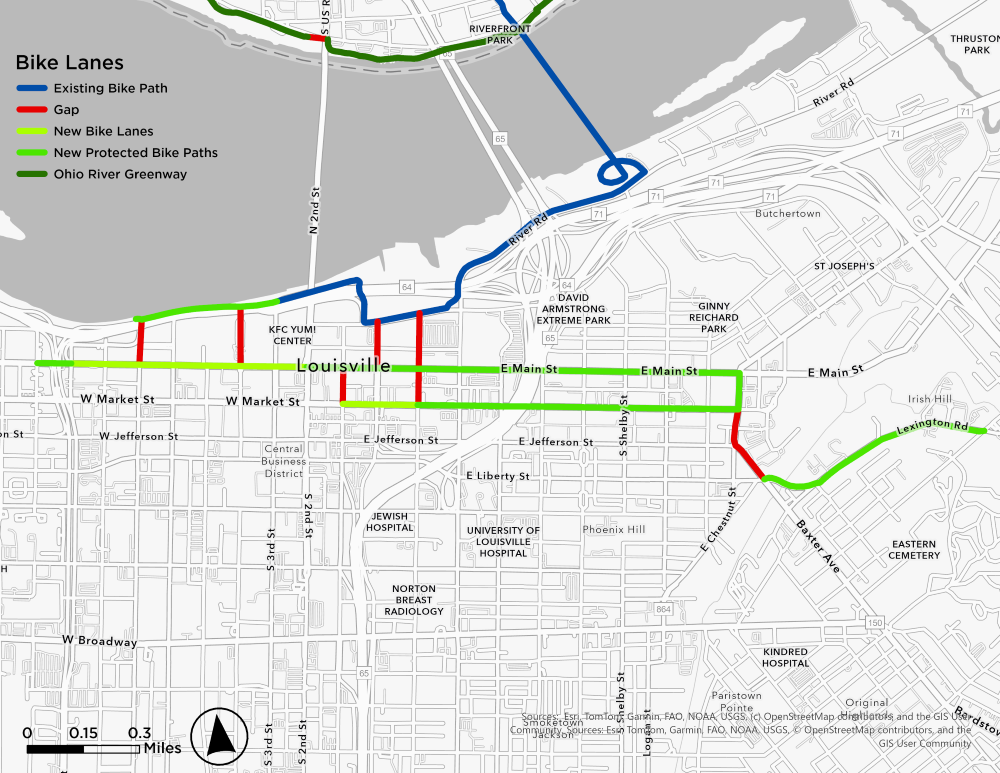
Building a more cohesive bike network also makes it easier to identify gaps in what exists, where cheaper, smaller infrastructure projects could make a big impact. Since there are only a few blocks where the bike lanes lapse, it is pretty easy to figure out where future expansions should go, such as in the map below.
All these new bike lanes will be useful for downtown in the coming years. They will help to drive up bicycle ridership, as perceived safety is a big factor in getting people on bikes and separated facilities play a big role in increasing perceived safety. The perceived safety reflects the reality of the safety situation, since bike lanes have been shown to slow traffic and reduce car-cyclist crashes. Low-stress facilities have been shown to increase bicycle commuting. As commuters move from cars to bikes, this can reduce traffic levels for vehicle users and improve traffic flow for everyone. There is also evidence to suggest that bike facilities can have economic benefits for nearby businesses.
Beyond the more traditional benefits, bike lanes increasing bike usage can lead to positive developments for personal and public health. Active commuting methods (walking or biking) are associated with lower all-cause mortality as active commuting curbs the sedentary lifestyle many Americans have adopted.. The congestion typical of vehicle commuting can also cause mental health issues due to the stress traffic can create. Generally, the biggest health downside of bicycle commuting the bodily risk posed by cars, which is curbed by protected bicycle infrastructure.
Downtown has seen substantial upgrades in bike infrastructure, but it is worth noting the city still only has around 2.5 miles of infrastructure for 400 square miles of land and 3000+ miles of roadway. There are many potential opportunities beyond downtown that could make a big impact. Many of Louisville’s bike commuters live in neighborhoods on the periphery of downtown, yet most have no protected connection: Shelby Park, Smoketown, Old Louisville, Russell, etc. Some important destinations that people often move between have zero connections, such as the University of Louisville’s Belknap Campus and the LOUMED District.
There are plans that indicate the existing bike network will expand in the near future. As the city undertakes two-way conversions across downtown in coming years, many will be feature some kind of bike lane if they follow the recommendations of the the Speck-Dempsey Downtown and NuLu Walkability Plan. Several projects for big corridors are slated to introduce bike lanes, such as Reimagine Ninth Street and Broadway all the Way. It is also possible some of the existing small gaps highlighted earlier will be filled based on previously released Main Remade exhibits, although it seems these roads are yet to be touched by any construction work. Some bike lanes will hopefully come about outside of downtown as well, such as on Barret Avenue. Downtown Louisville, at a minimum, will be incredibly easy to traverse by bike in the coming years if everything goes through.


.png)