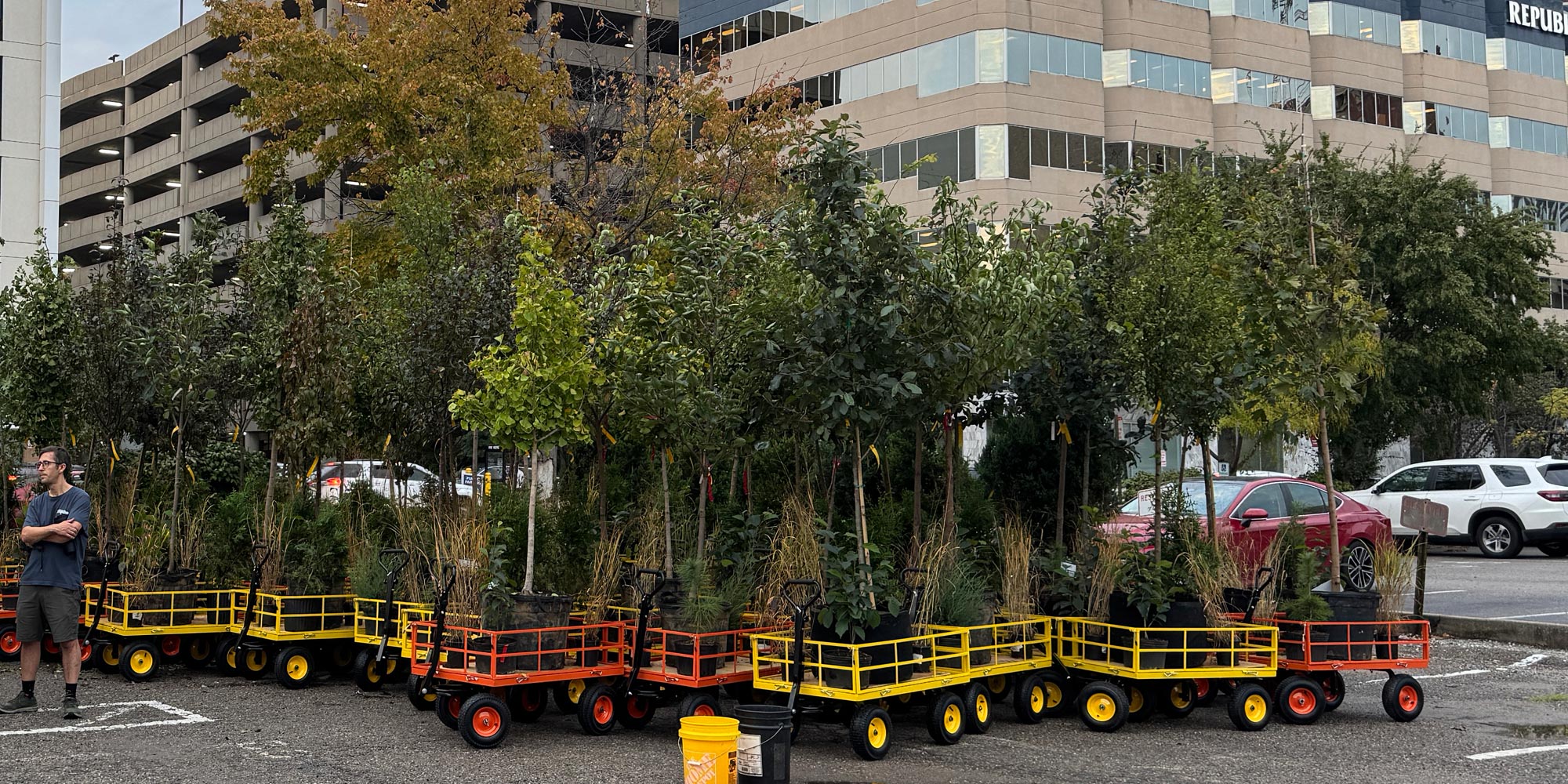
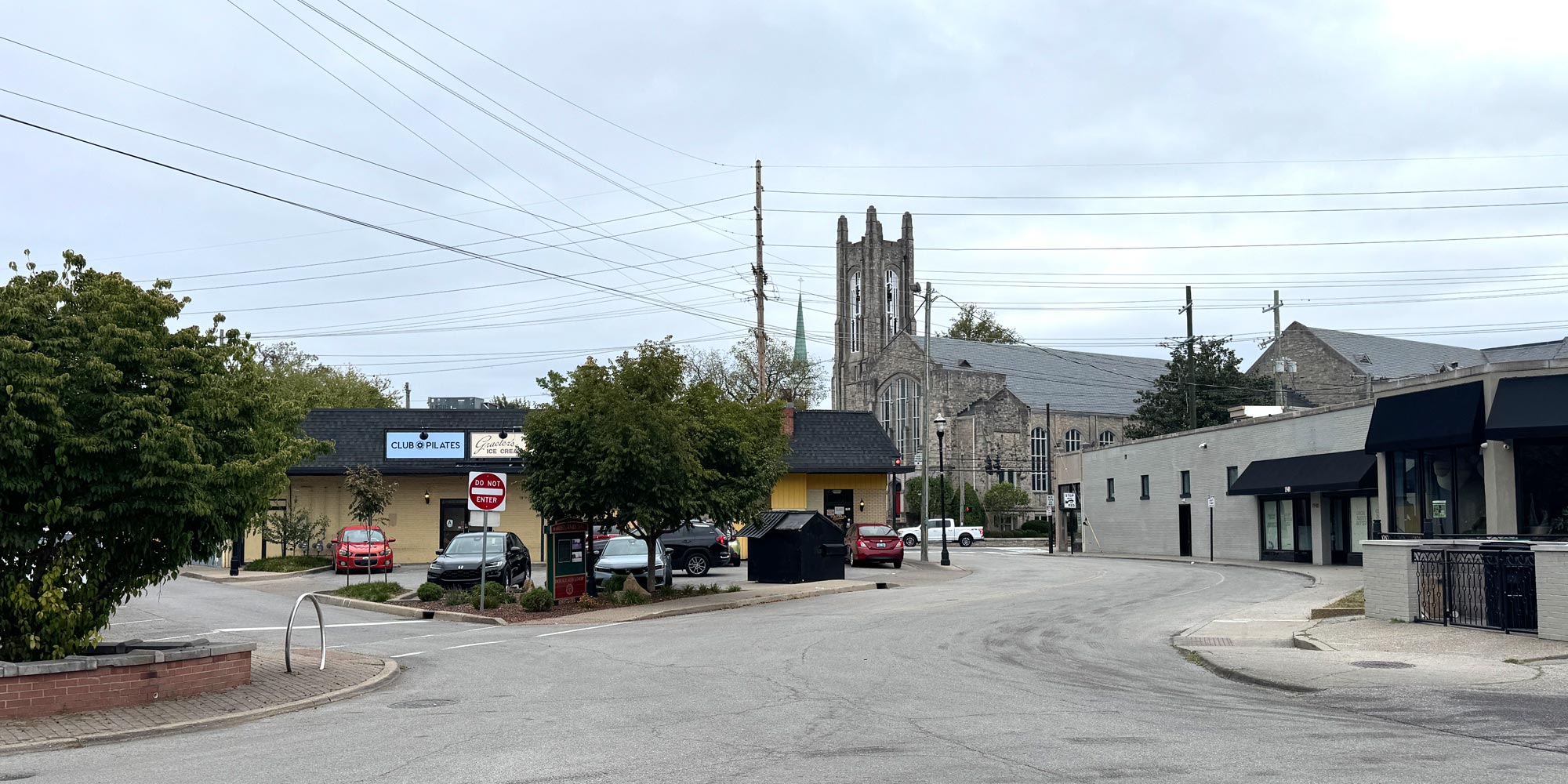
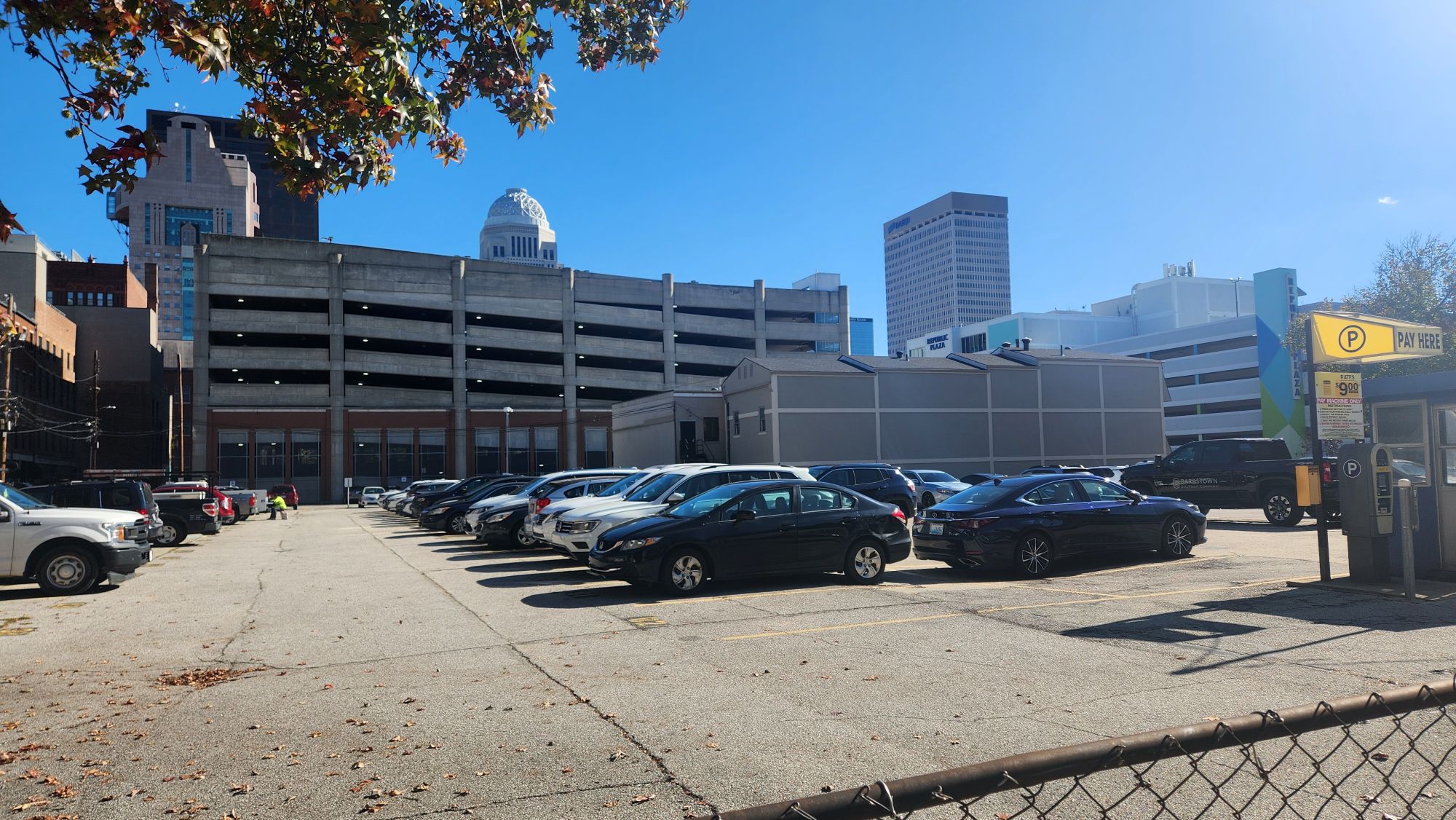
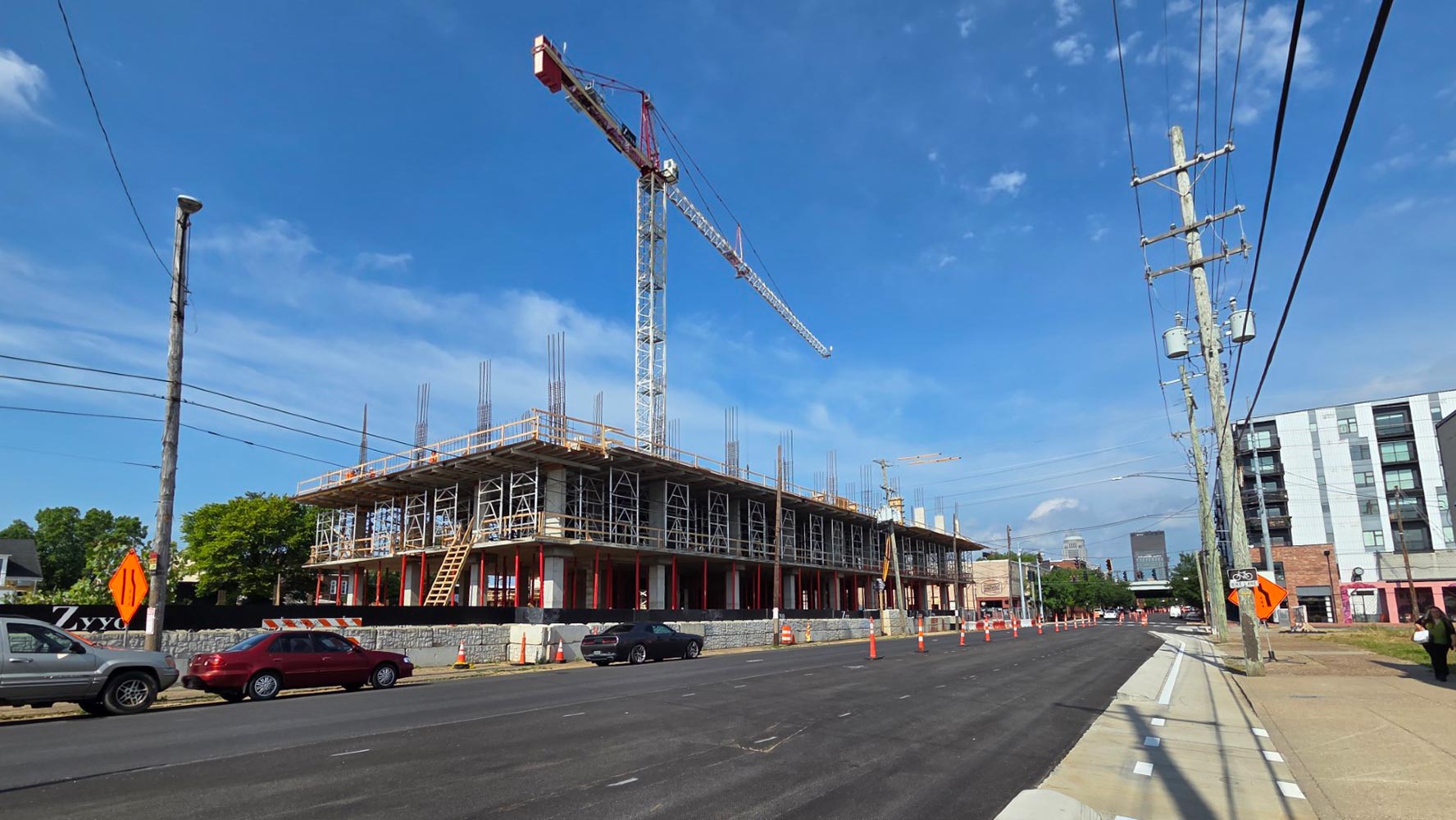
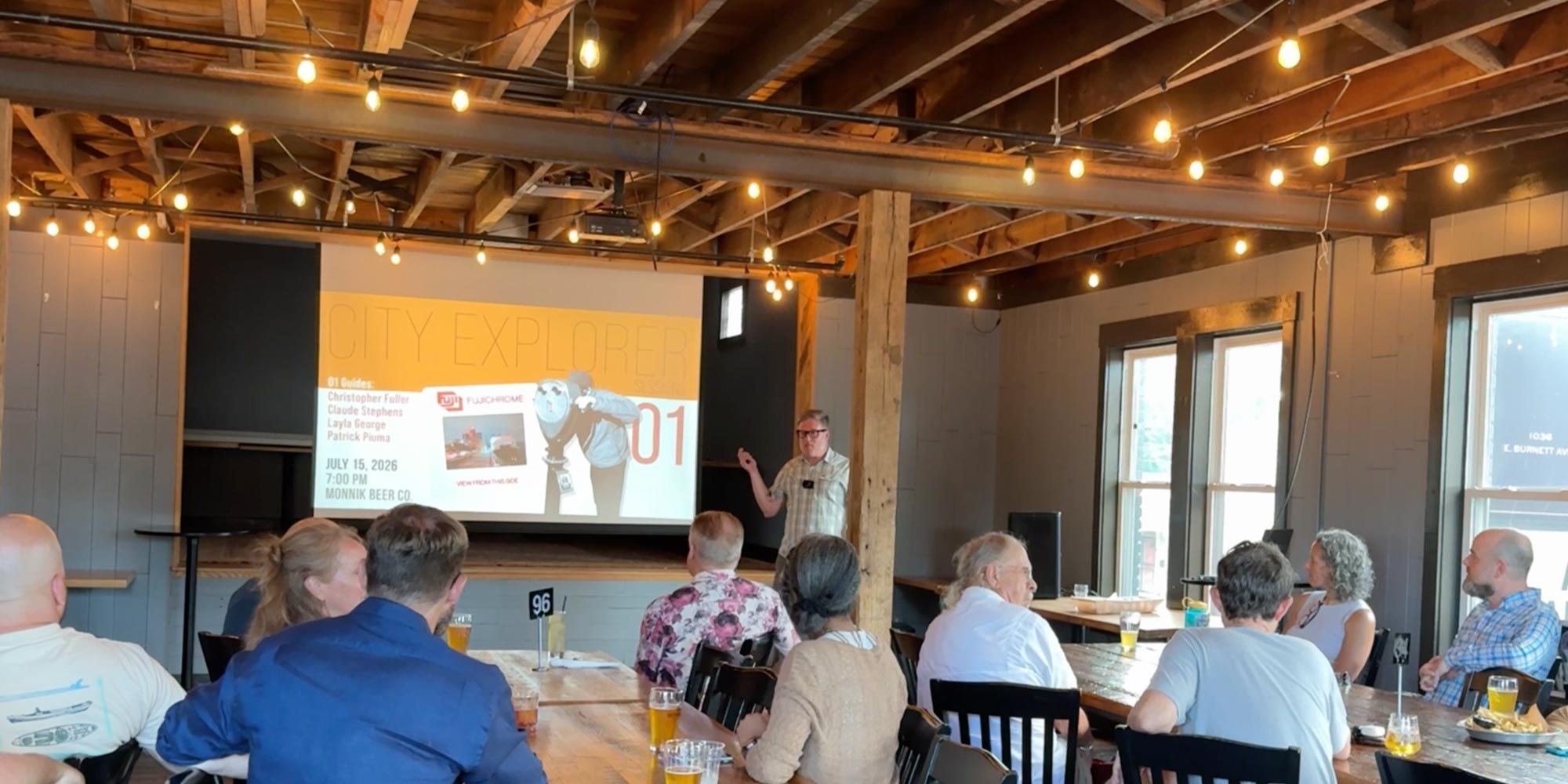
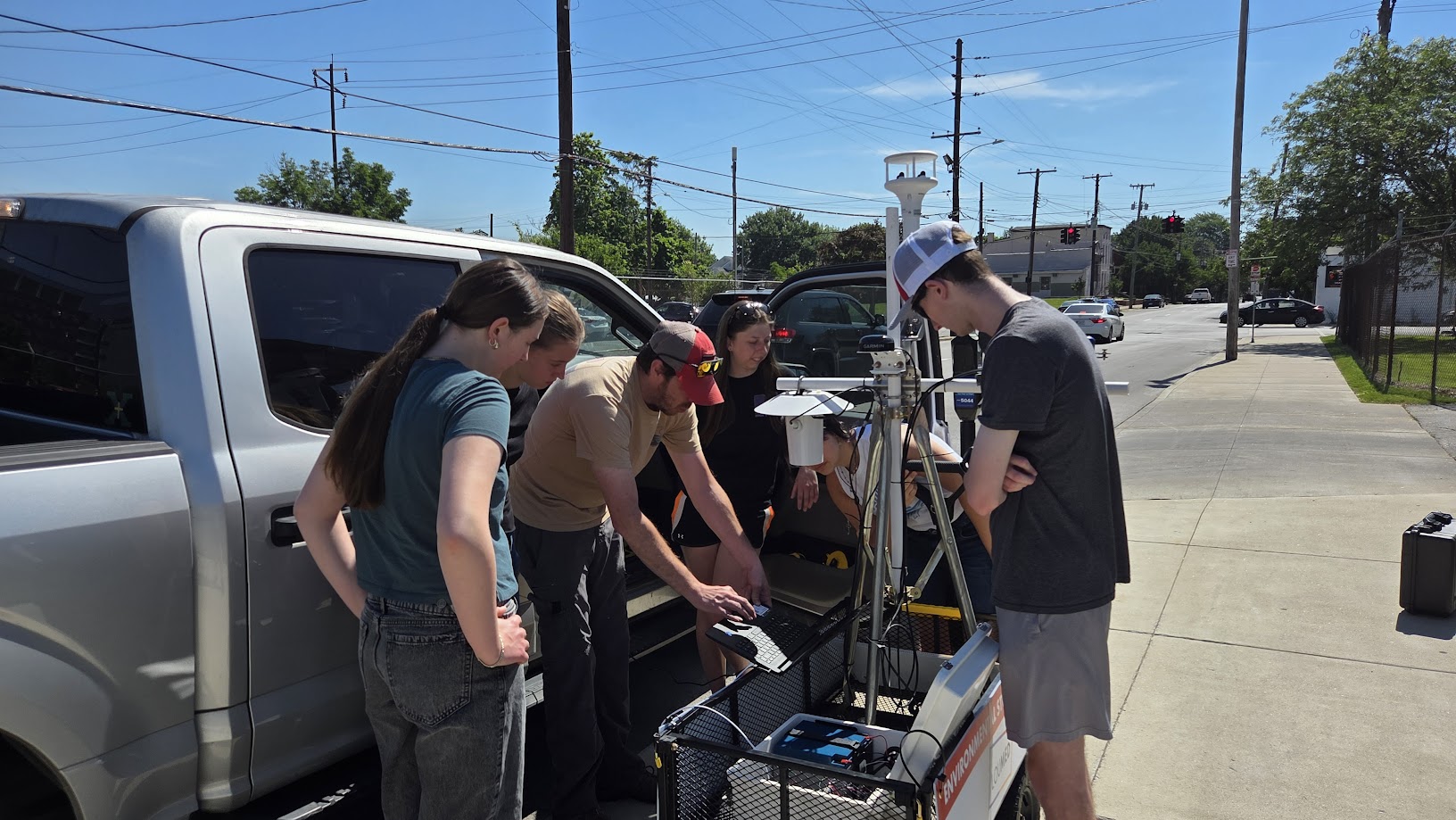
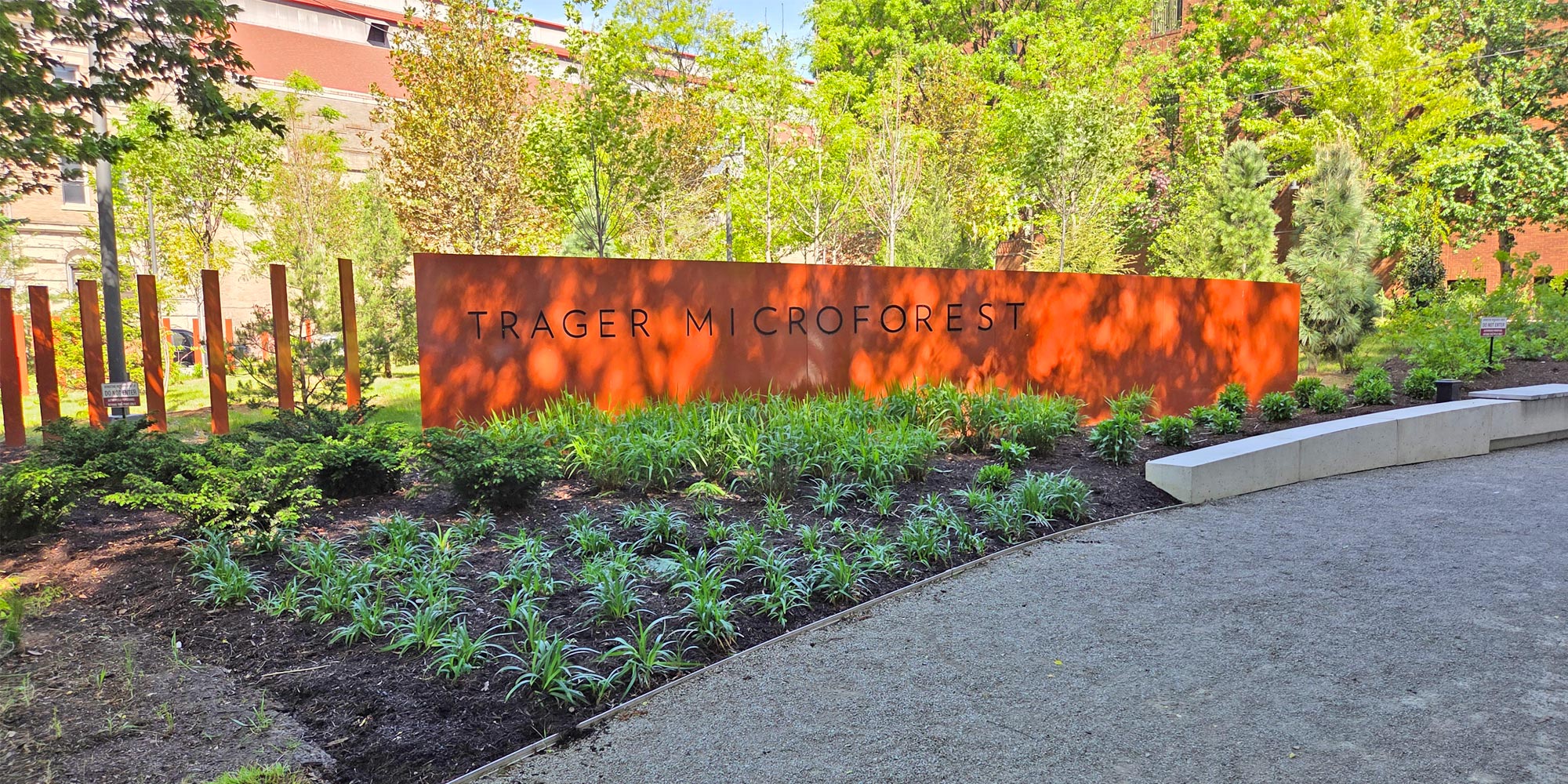
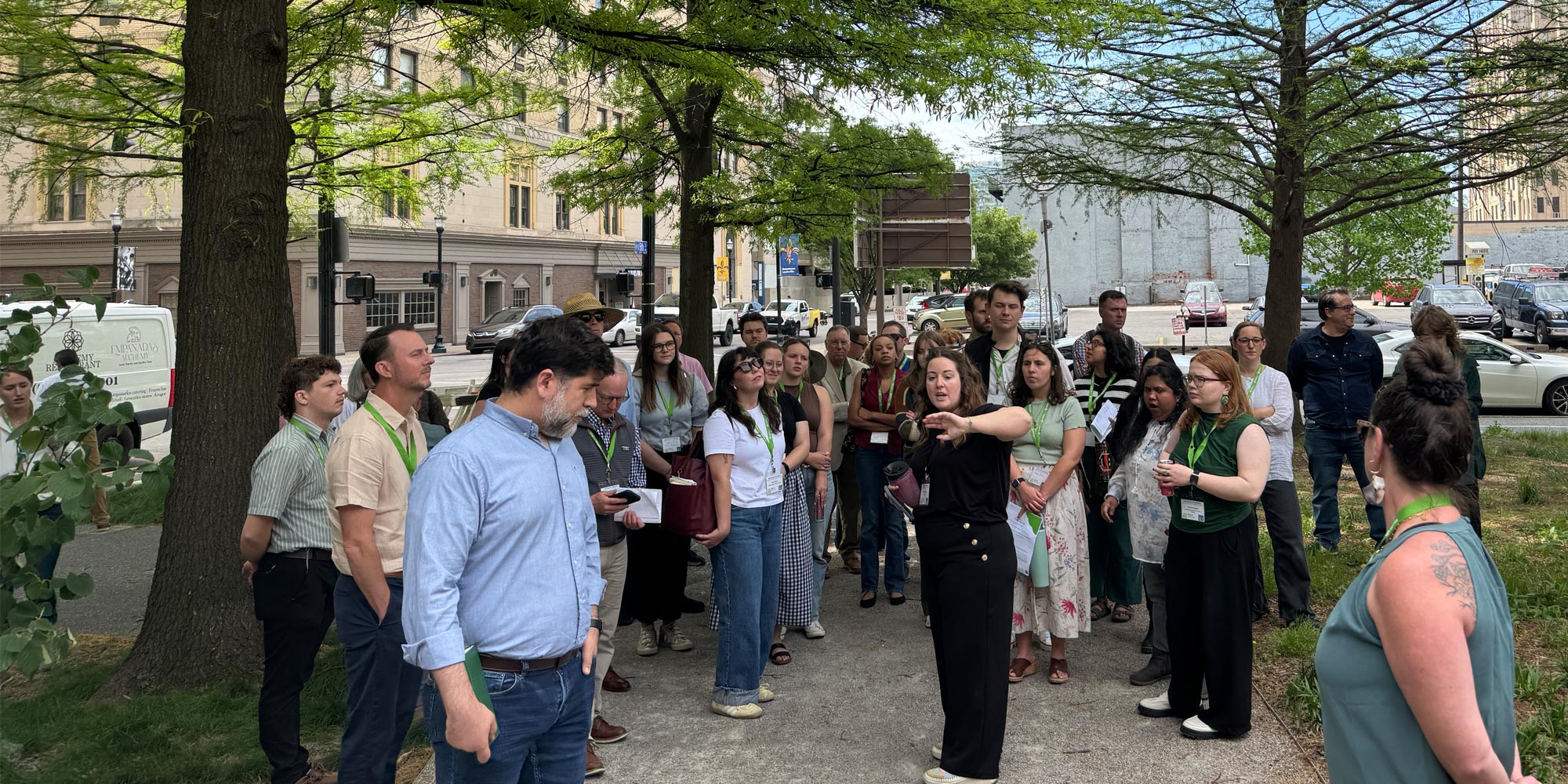
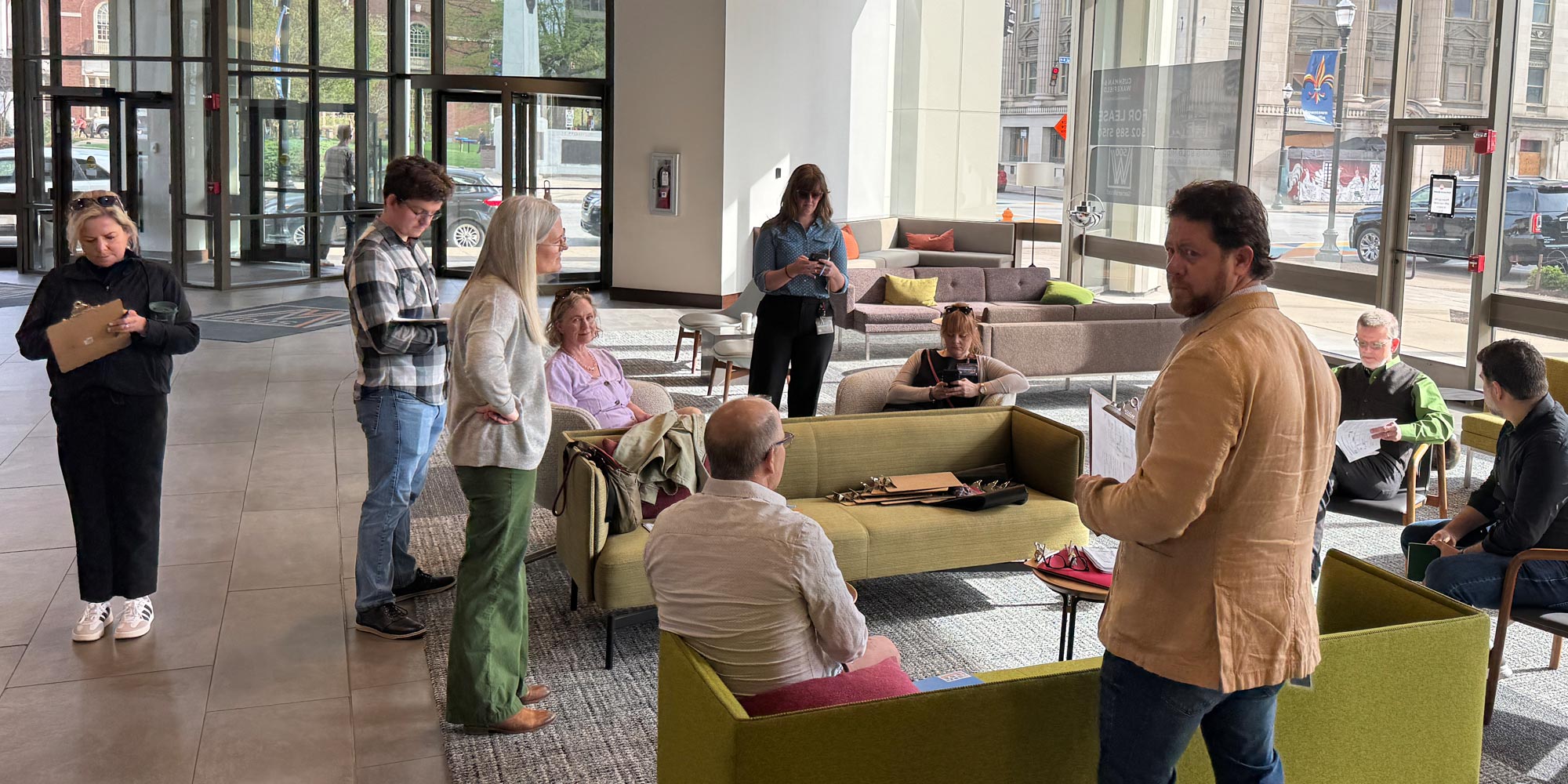
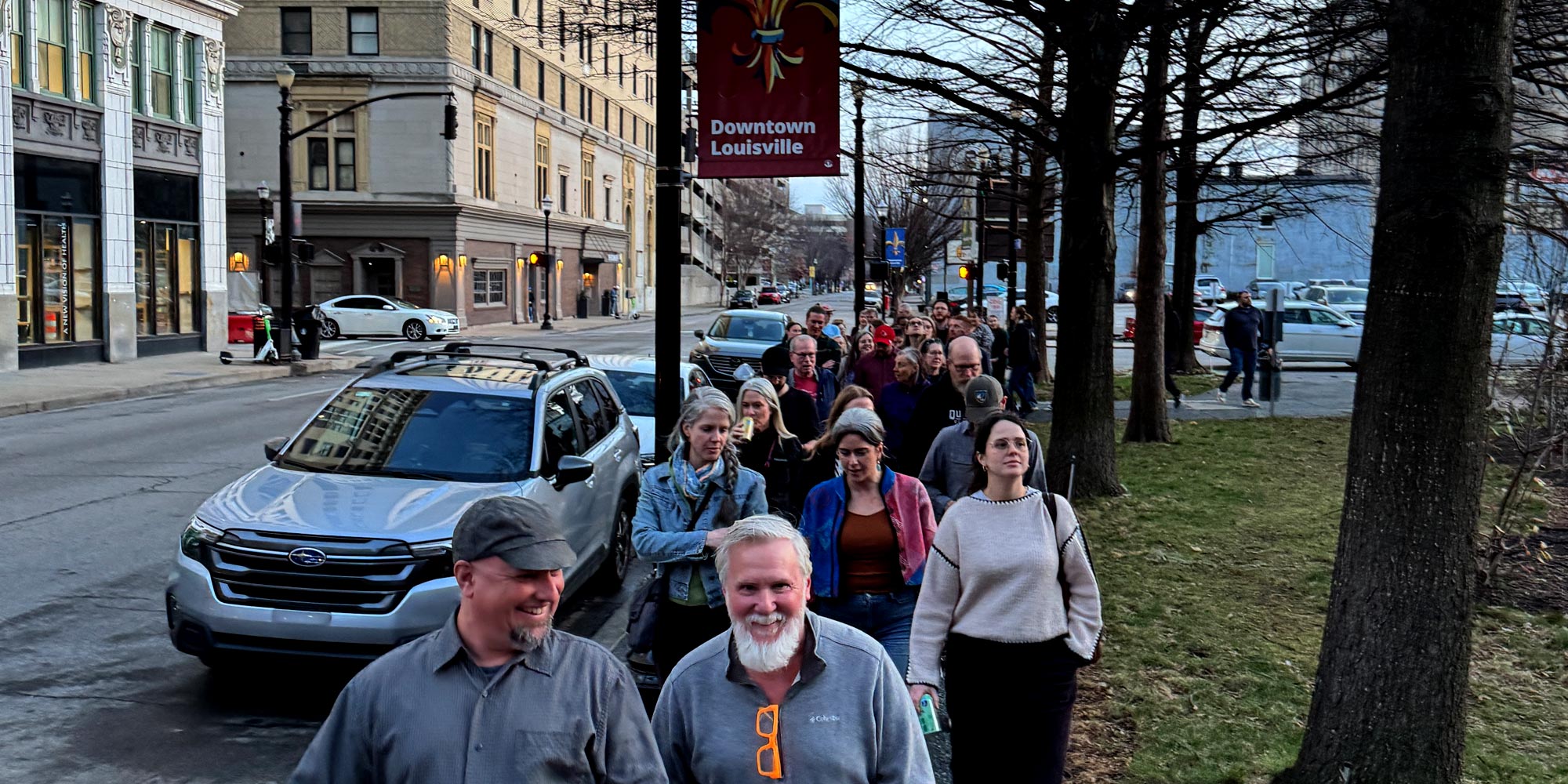
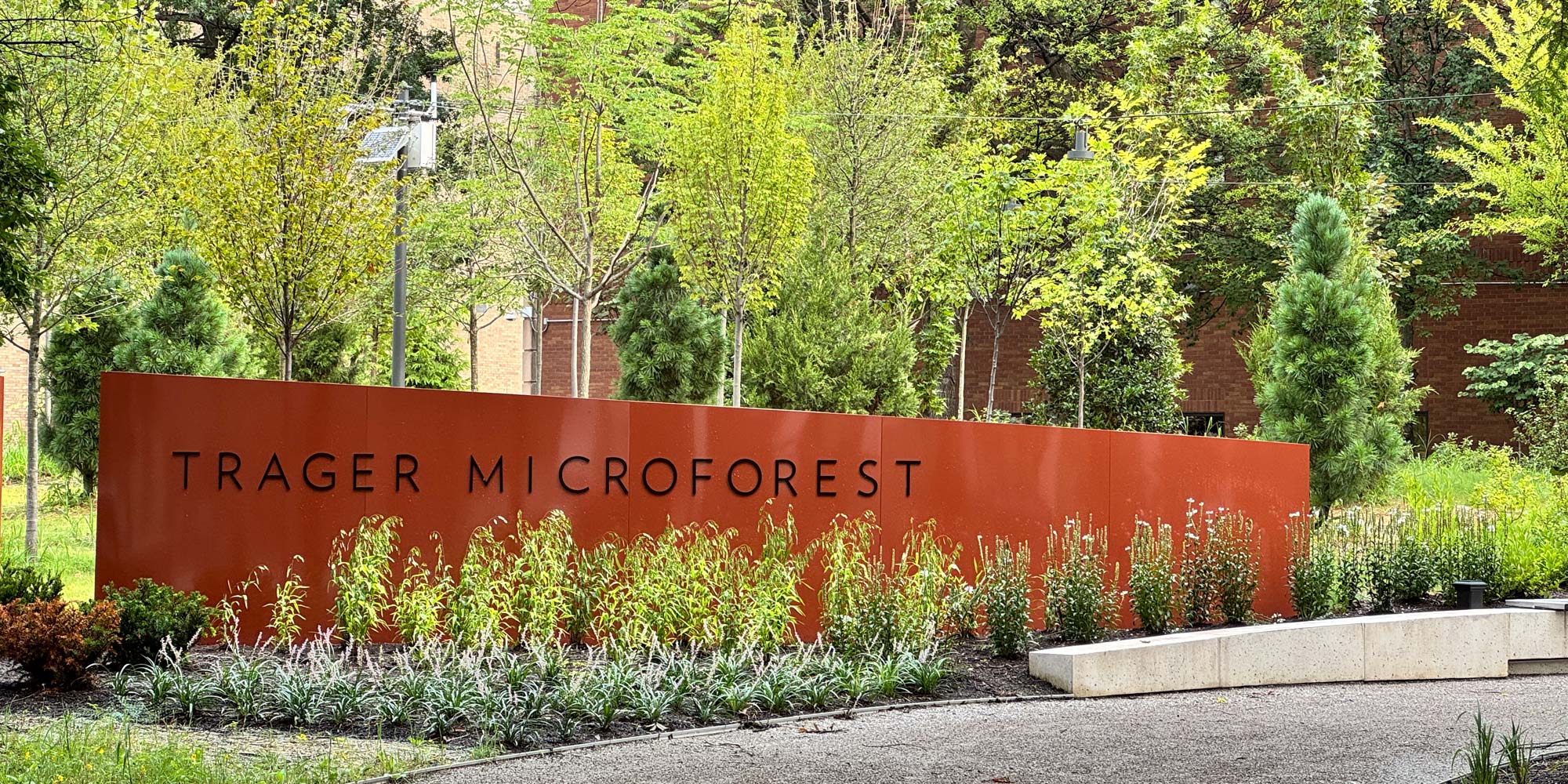
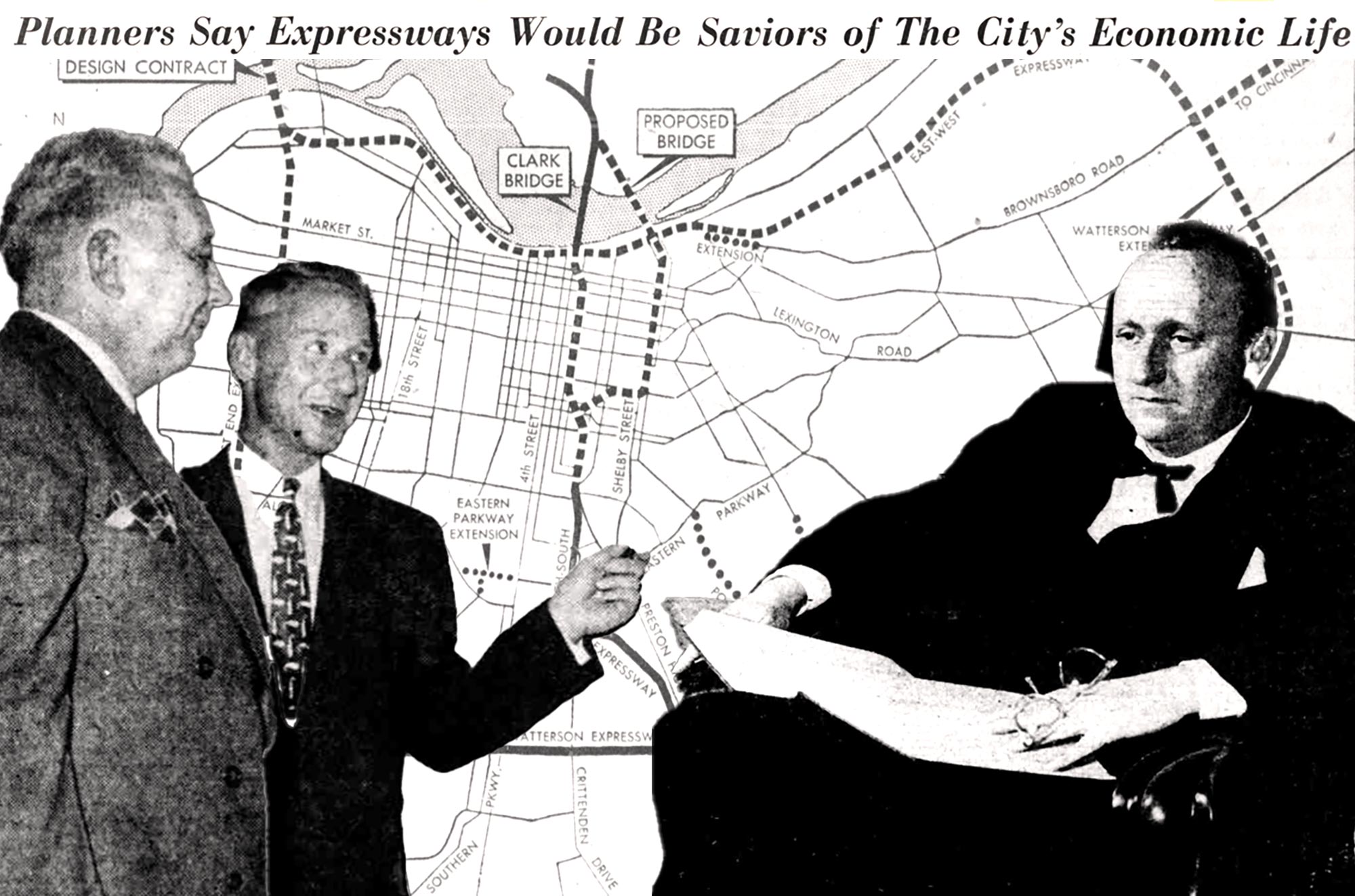
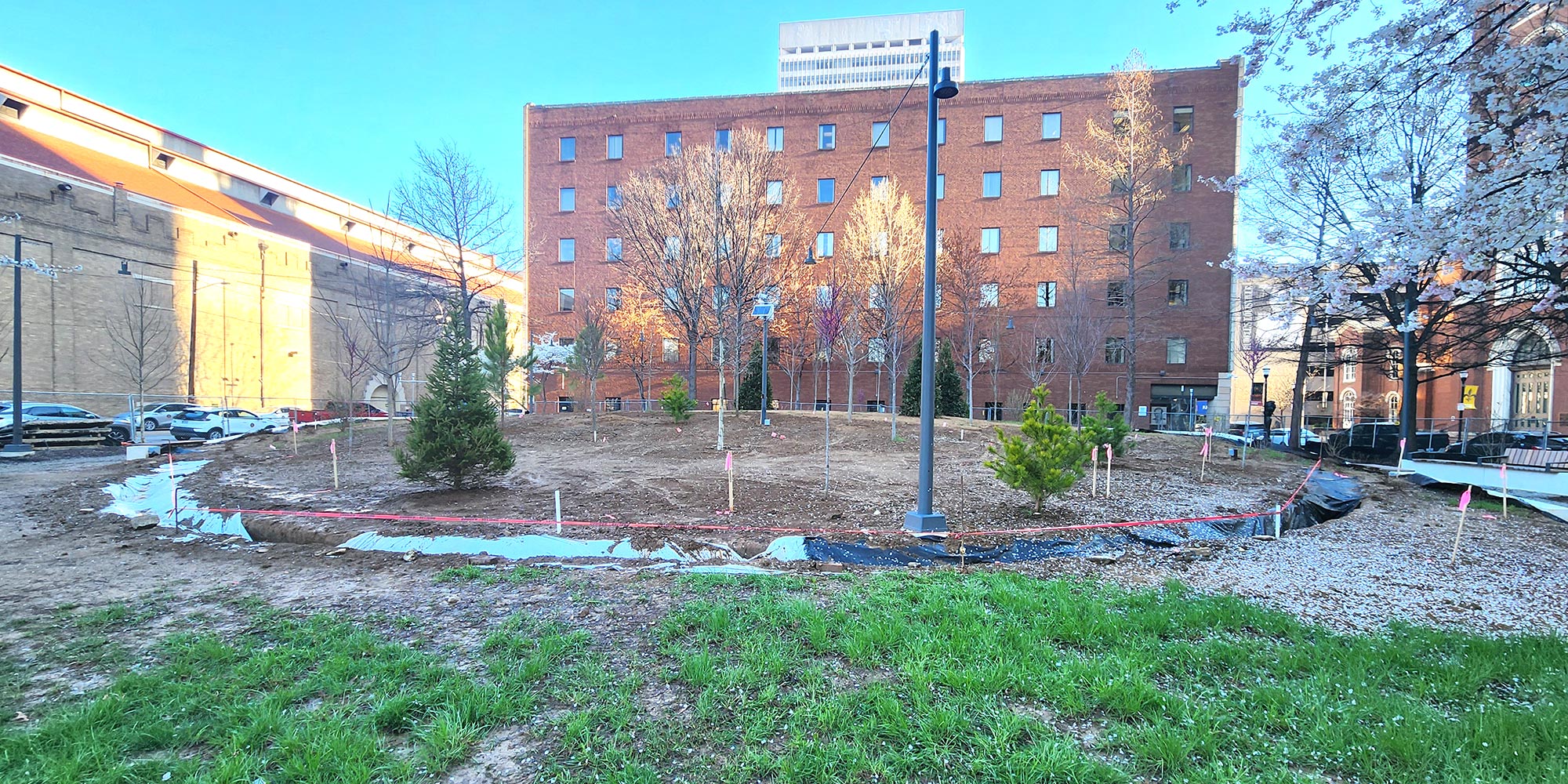
Earlier this morning the Urban Design Studio hosted a session at the Trager Microforest for a group of landscape architects and urban planners attending the Kentucky ASLA / APA Conference. I joined Morgan Dunay and David Toda from Gresham Smith to present the project's origins, design, planting strategy, and ongoing research followed by a walk and talk in the forest across the street.
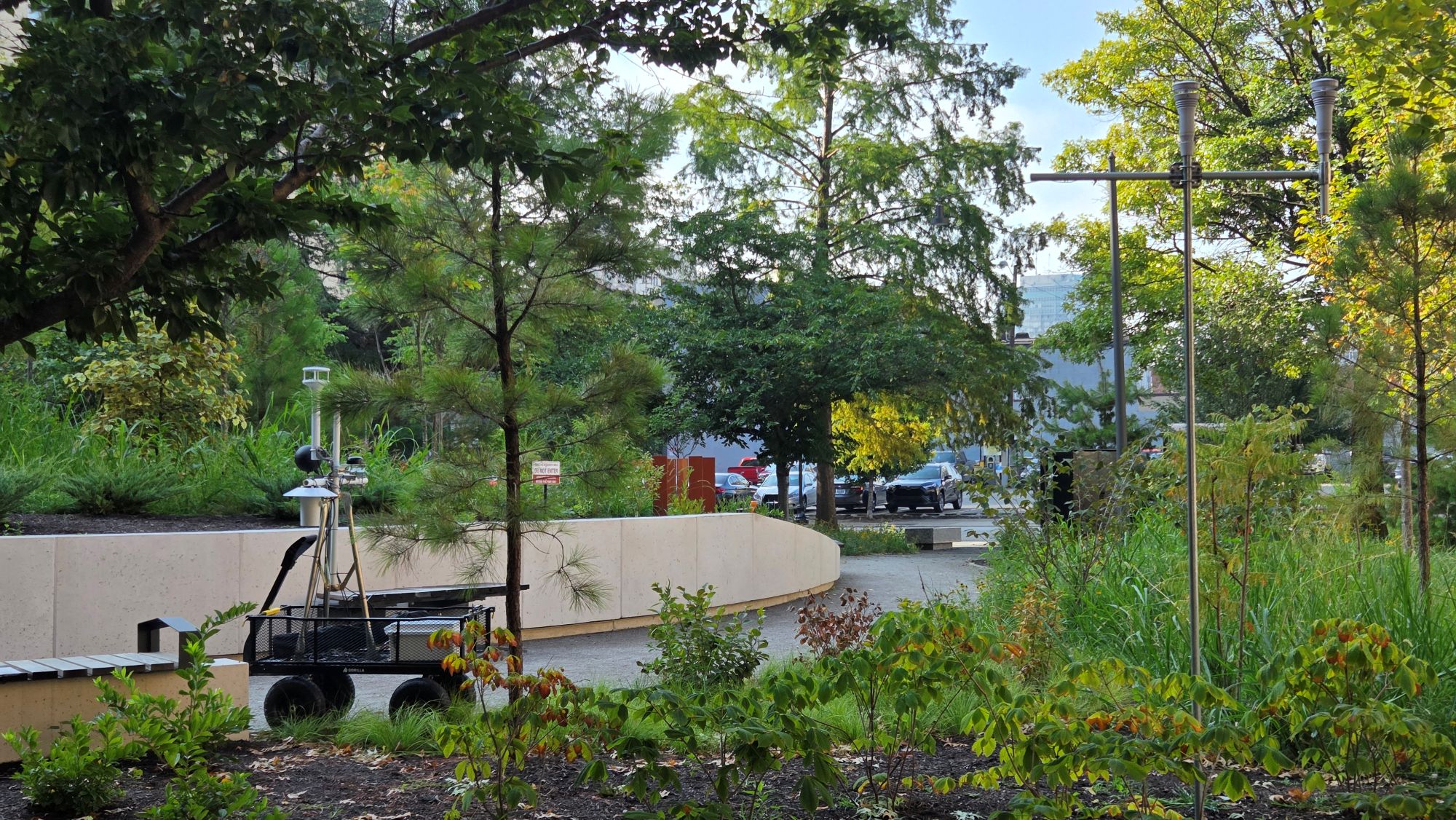
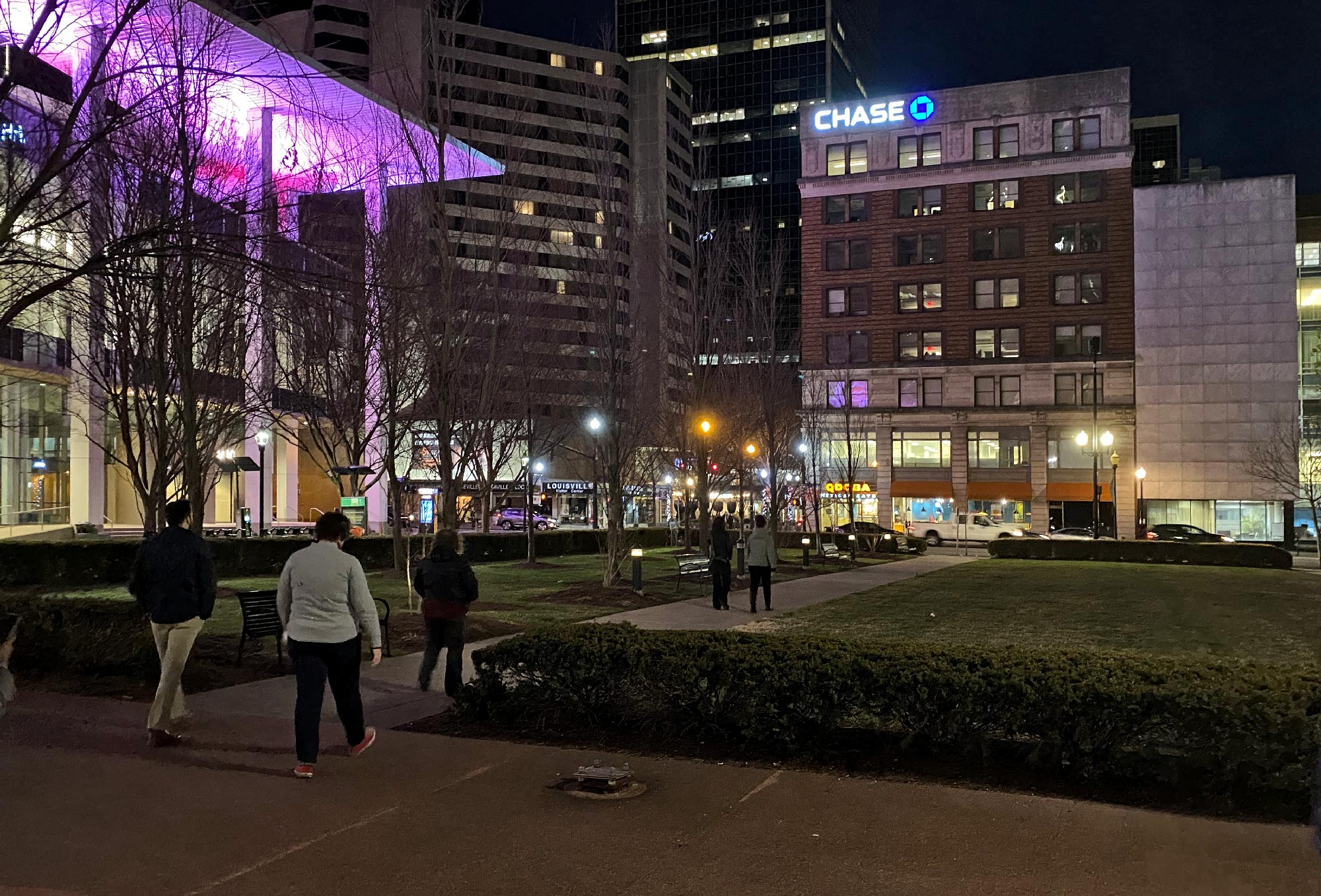
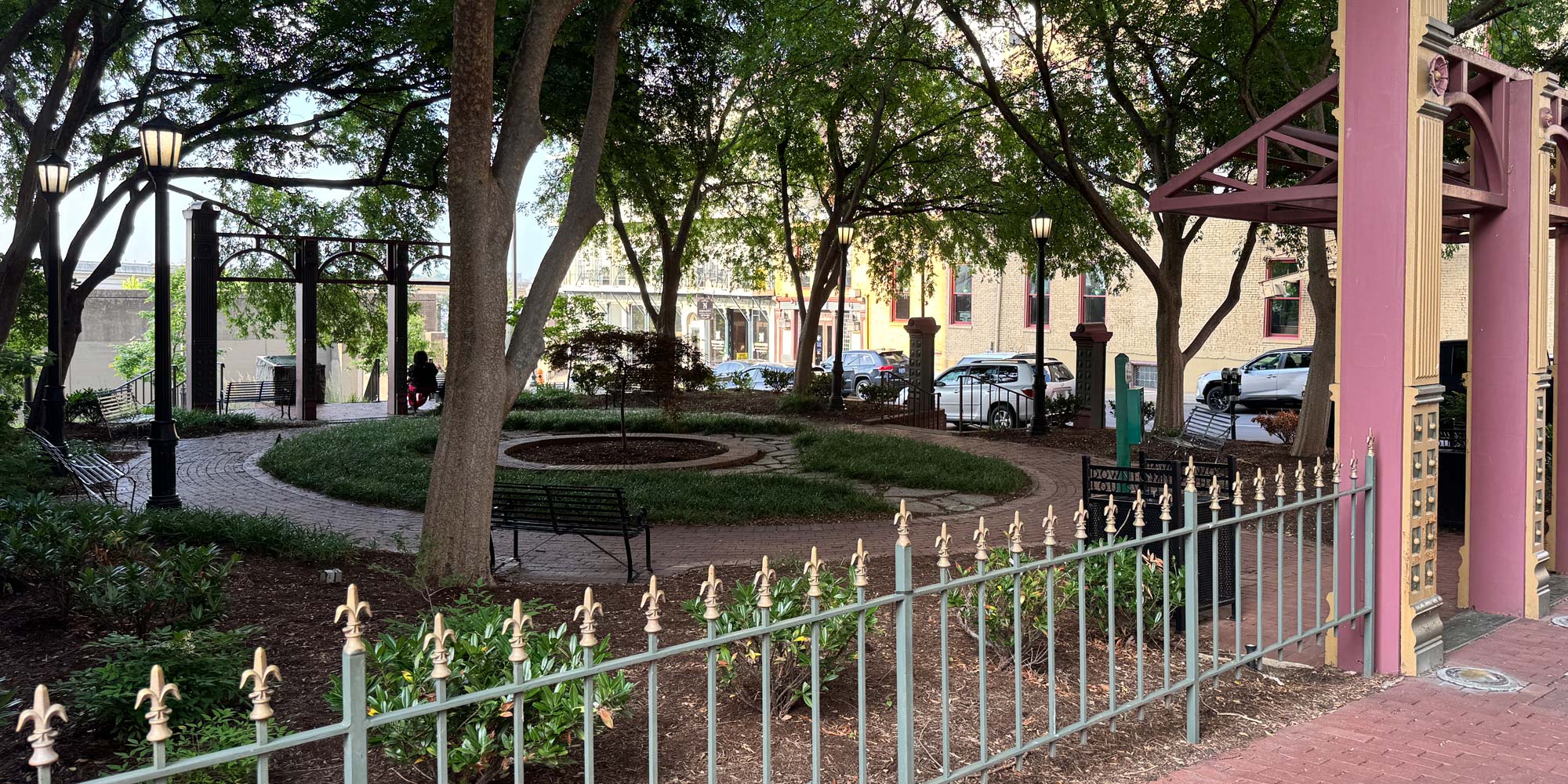
We have the fortune to not only talk about the urban greening, but give people a chance to experience the microforest firsthand, to see the species selections, the research equipment, and the design details up close. Developing a forest in the middle of downtown comes with real challenges and real opportunities, and many of them are hard to explain without being there. How do you bring intense, layered planting to a well-used public space? How do you protect a fragile ecological experiment from the wear and friction of daily downtown life... dogs, cigarette butts ground into the soil bed, foot traffic that doesn't follow the path? These aren't hypotheticals. They're the ongoing work.
But alongside those pressures are the things that make this site worth protecting. A small block in the middle of downtown Louisville can calm your nerves, draw in birds, and put you within arm's reach of over thirty species of trees and understory plants. That contrast, urban intensity and ecological refuge is something we don't get enough of.
And that is exactly what this site is for. The Trager Microforest was never meant to be a finished product. It is a living laboratory in the heart of downtown, designed to be poked at, questioned, and learned from. Research on cooling effects, urban biodiversity, human stress reduction, and community impact is actively underway, and the site will keep evolving as part of Louisville's Greenprint Initiative.
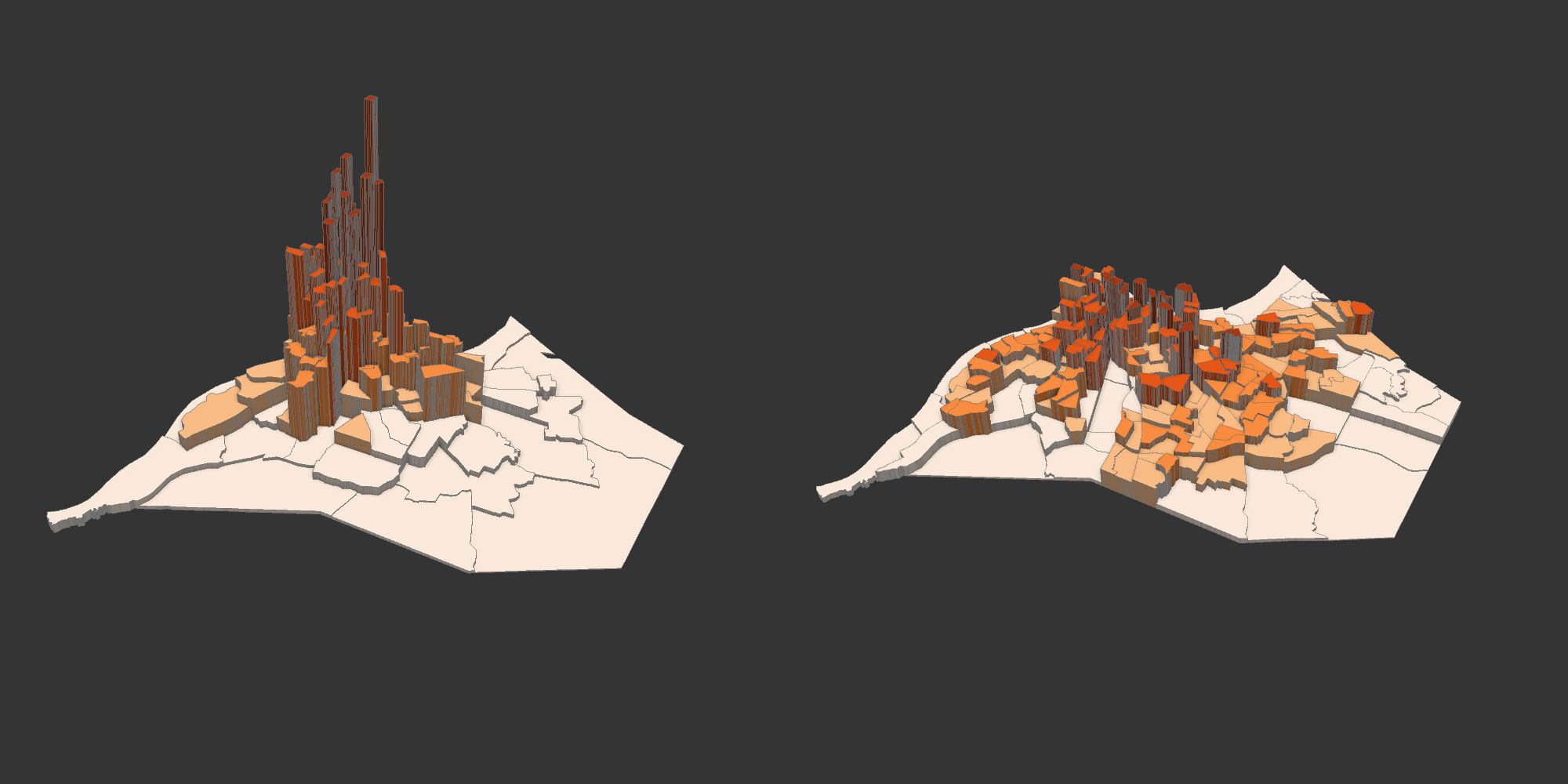
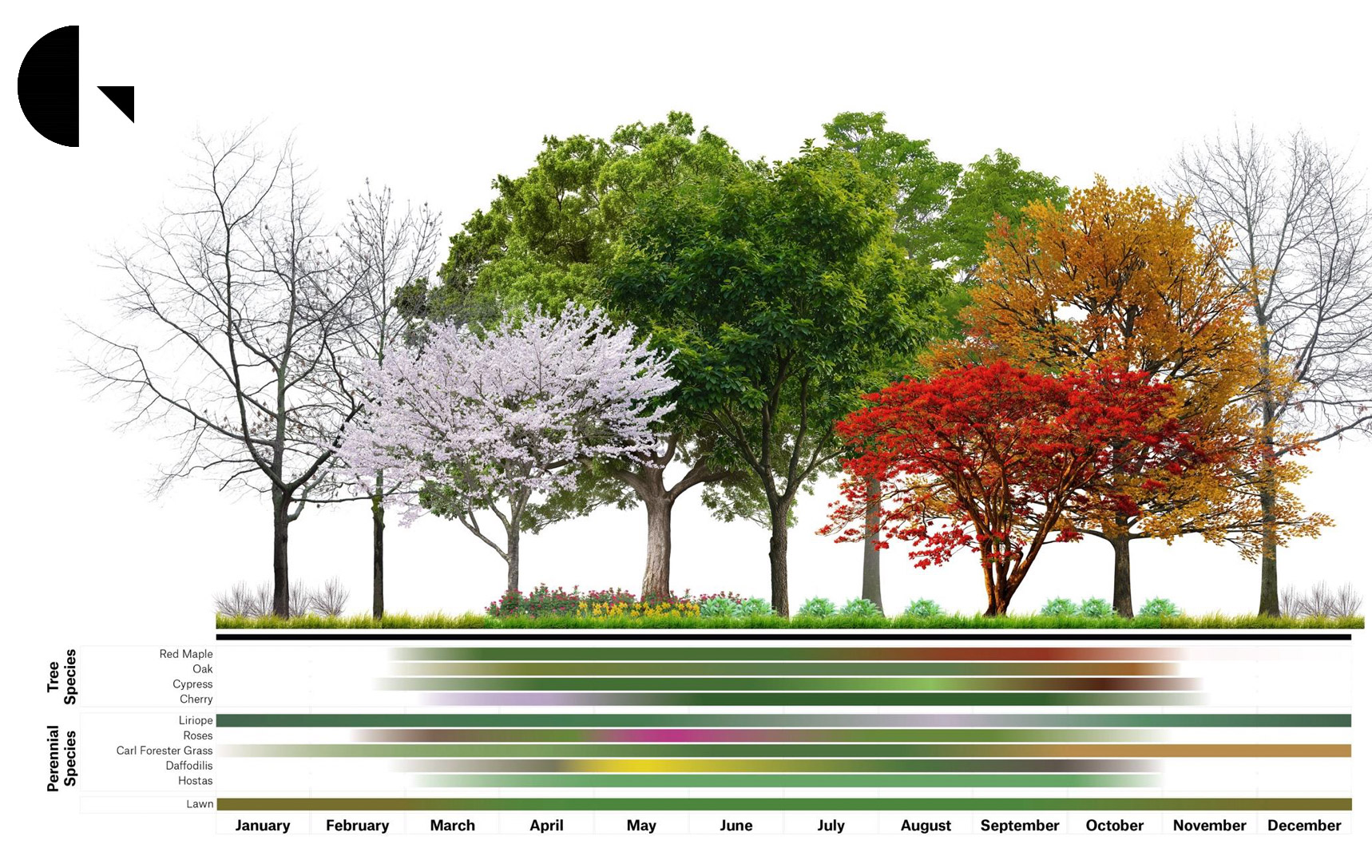
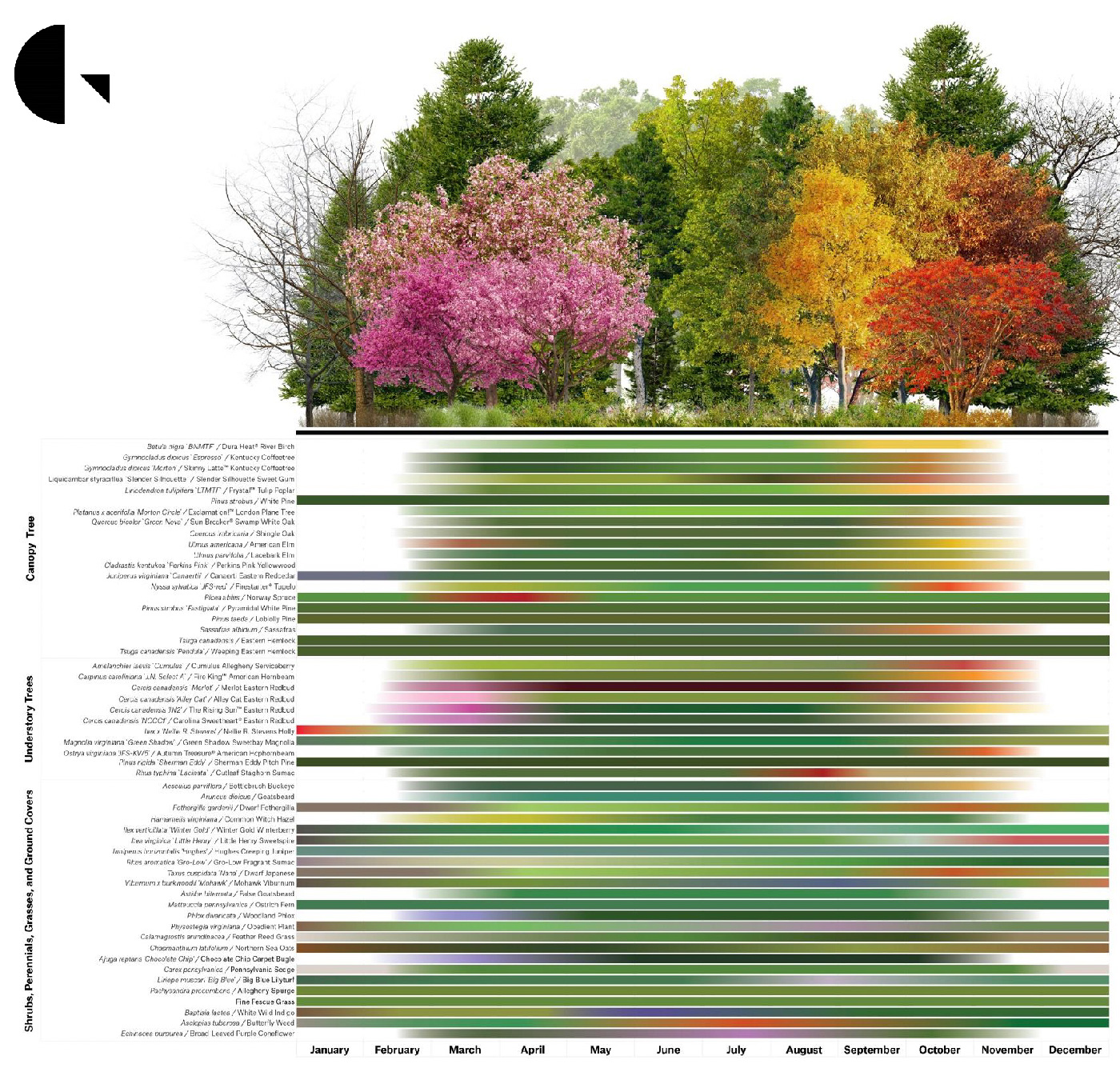
I particularly like these graphics that Gresham Smith produced that show the variety of plants and track their seasonal activity over the course of a year really helps to illustrate how much more diversity and plants we added to the existing space.
To everyone who joined us, thank you for bringing your expertise and curiosity. This is the kind of exchange that makes the work better. We hope you'll come back as the forest grows.
As we mentioned during the session, this site was always meant to be a catalyst. We hope to bring more urban forests into downtown in the not-too-distant future, and sessions like this are how we keep the momentum going.
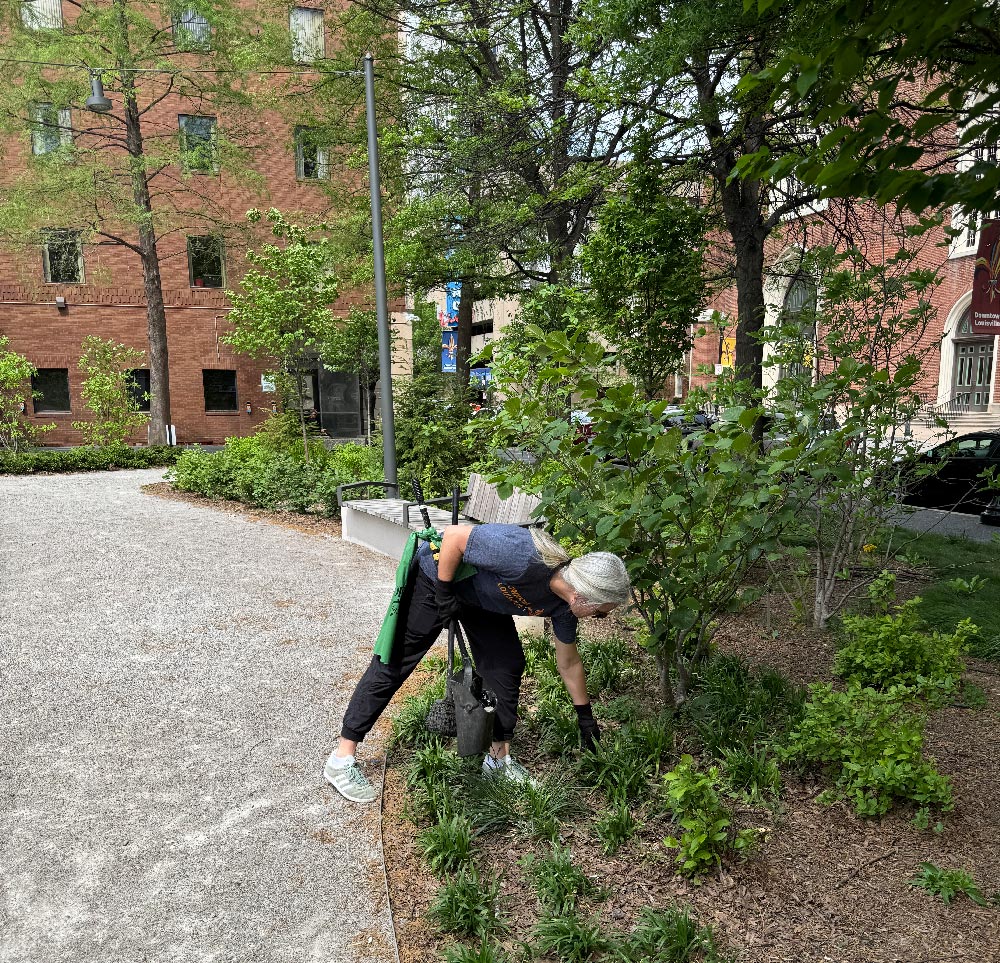
A quick shout-out to the Louisville Downtown Partnership and their colleagues, who we spotted out and about after the session running a downtown cleanup, including picking up cigarette litter along the Trager MicroForest's pathways. They care for downtown as much as we do, and it's noticed and appreciated!


.png)